Does Music Actually Lower
Your Dementia Risk?
Groundbreaking study of 10,893 older Australians delivers a joyful answer: Yes
— and the protection is bigger than anyone expected
Music lovers, rejoice.
For years, scientists have suspected that music might help protect the ageing brain. Now a major new Australian study has delivered some of the strongest evidence yet that the answer is a resounding yes.
Researchers followed more than 10,893 healthy Australians aged 70 and over for up to nine years.
All started the study with sharp minds and no dementia. The results, published in the International Journal of Geriatric Psychiatry, are genuinely exciting.
The Remarkable Findings That Could Change How We Age
Listening to Music Every Day Slashes Dementia Risk by 39%
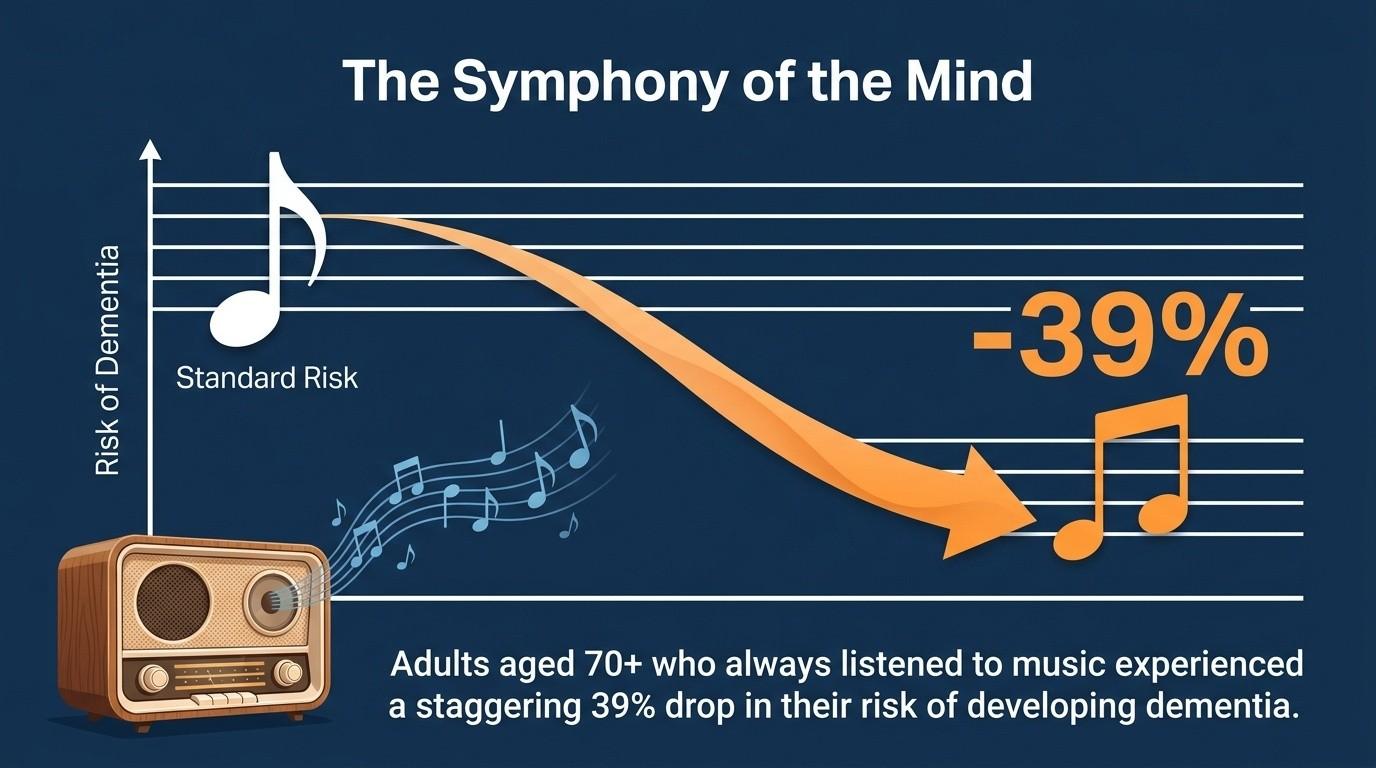
Those who said they always listened to music had a 39 per cent lower risk of developing dementia compared to people who only listened rarely or never.
They were also 17 per cent less likely to develop milder cognitive impairment (known as CIND).
Playing a Musical Instrument Cuts Dementia Risk by 35%
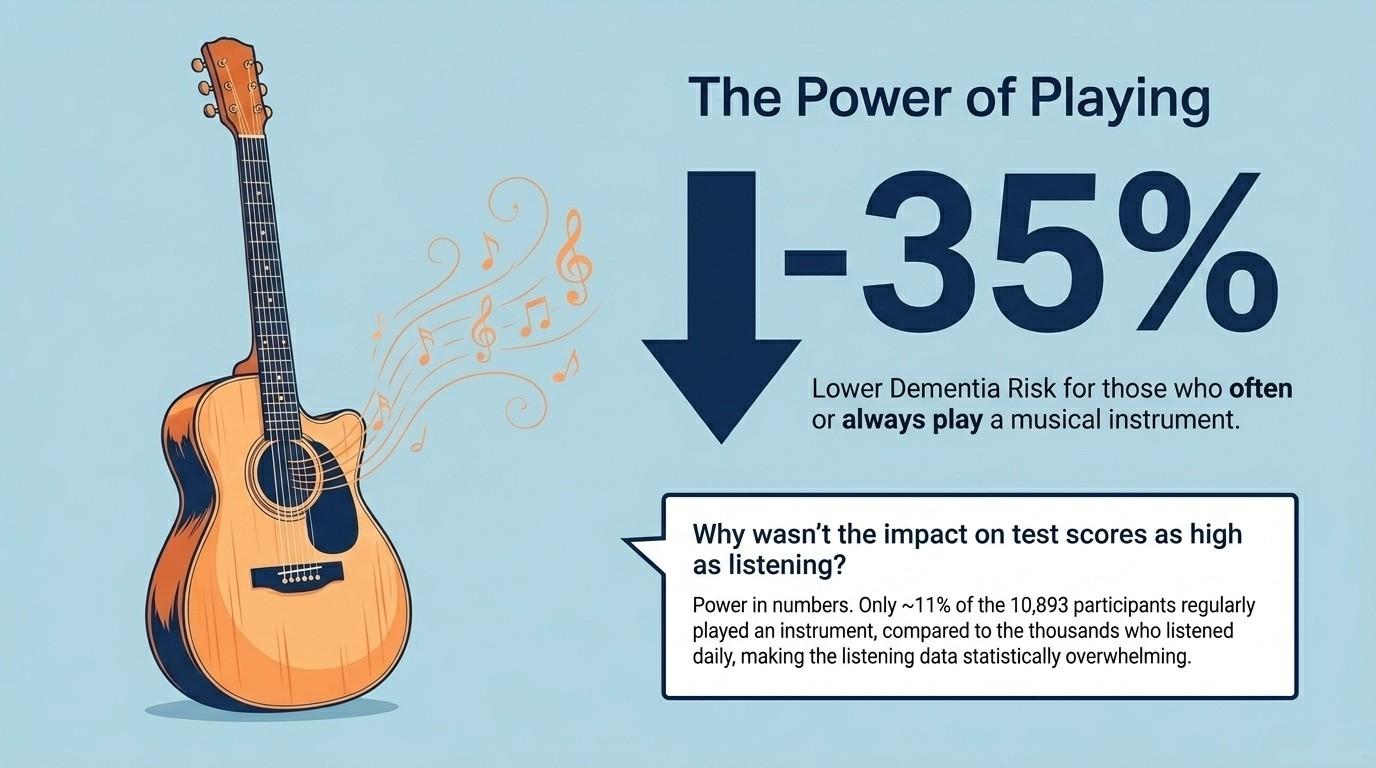
People who played a musical instrument often or always enjoyed a 35 per cent reduction in their risk of dementia.
Doing Both Gives the Strongest Protection
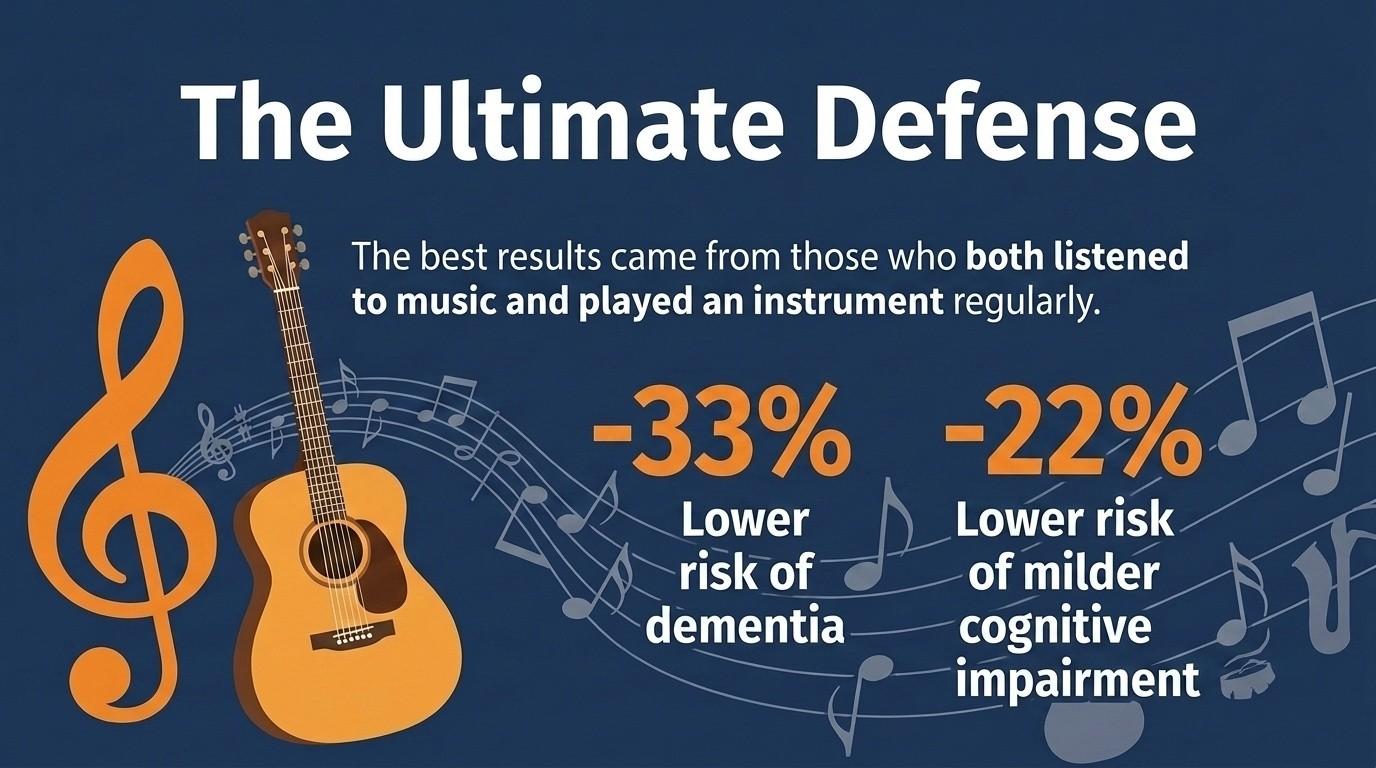
The best results came from those who both listened to music and played an instrument regularly.
They had a 33 per cent lower risk of dementia and a 22 per cent lower risk of milder cognitive impairment.
Want to actually enjoy music more often — comfortably and consistently?
Biggest Benefits for the Highly Educated
The protective effect was especially powerful for one group: those with 16 or more years of education (university level or higher).
In this group, always listening to music was linked to a stunning 63 per cent lower risk of dementia.
Researchers suggest higher education may build extra “cognitive reserve” in the brain, allowing music to have an even greater protective effect.
But importantly, clear benefits were still seen across all education levels.
Real Improvements in Memory and Thinking
Beyond just lowering risk, daily music listeners also performed significantly better over time on tests of global cognition and memory — the exact areas that usually decline first in dementia.
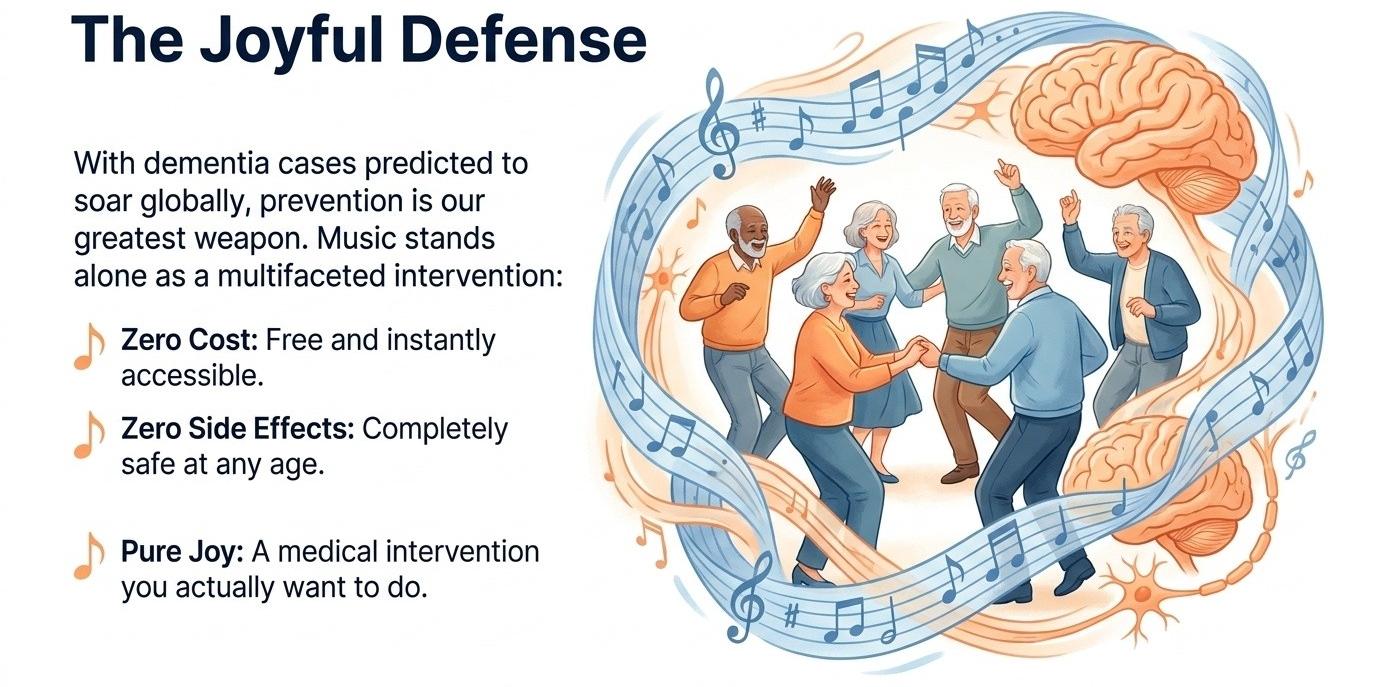
Why Music May Be Such Powerful Brain Medicine
Music is unique because it simultaneously stimulates memory, emotion, movement, attention and even social connection.
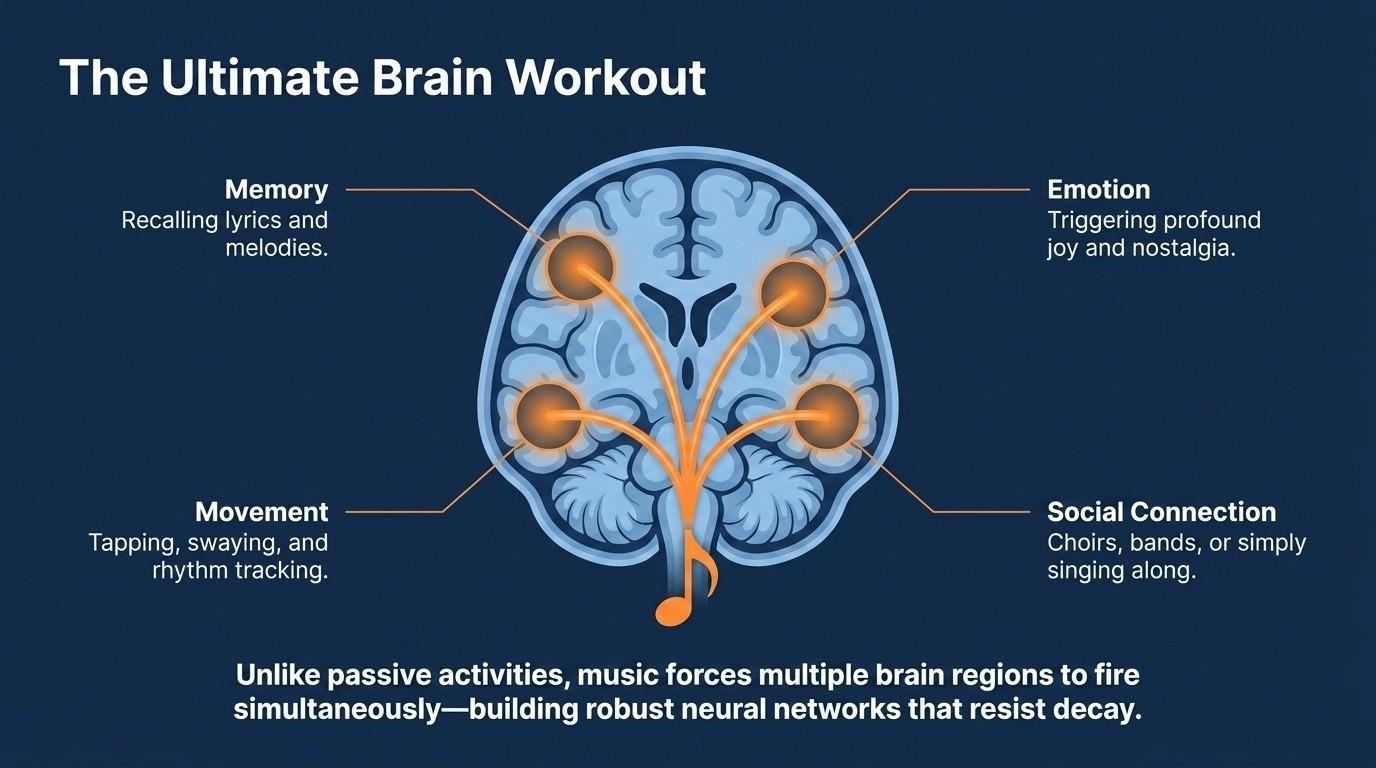
It’s joyful, free, has no side effects, and can be enjoyed at any age.
Lead researcher Associate Professor Joanne Ryan from Monash University said:
“These results highlight music as a promising, accessible strategy to help reduce cognitive impairment and delay the onset of dementia in later life.”
The Easiest Way to Turn Music Into Your Daily Brain-Protecting Habit
Now that we know how powerful regular music listening can be for brain health, the big question becomes:
How do you actually make it a consistent daily habit — especially as you get older?
Comfort and convenience are key. Holding a phone or wearing uncomfortable earbuds or headphones can quickly become frustrating.
That’s exactly why Necktheatre was created.




NeckTheatre is a comfortable, hands-free wearable audio system, designed specifically for those who want to enjoy music while walking, dancing, gardening or just moving around the house.
📺TV at night.
🎶Podcasts during the day.
📞Calls when needed.
☺️No blocked ears.
Many users say it has made daily music listening effortless and enjoyable again.
👉 Discover how Necktheatre can help you turn on the benefits of music every single day:
A Gold-Standard Study
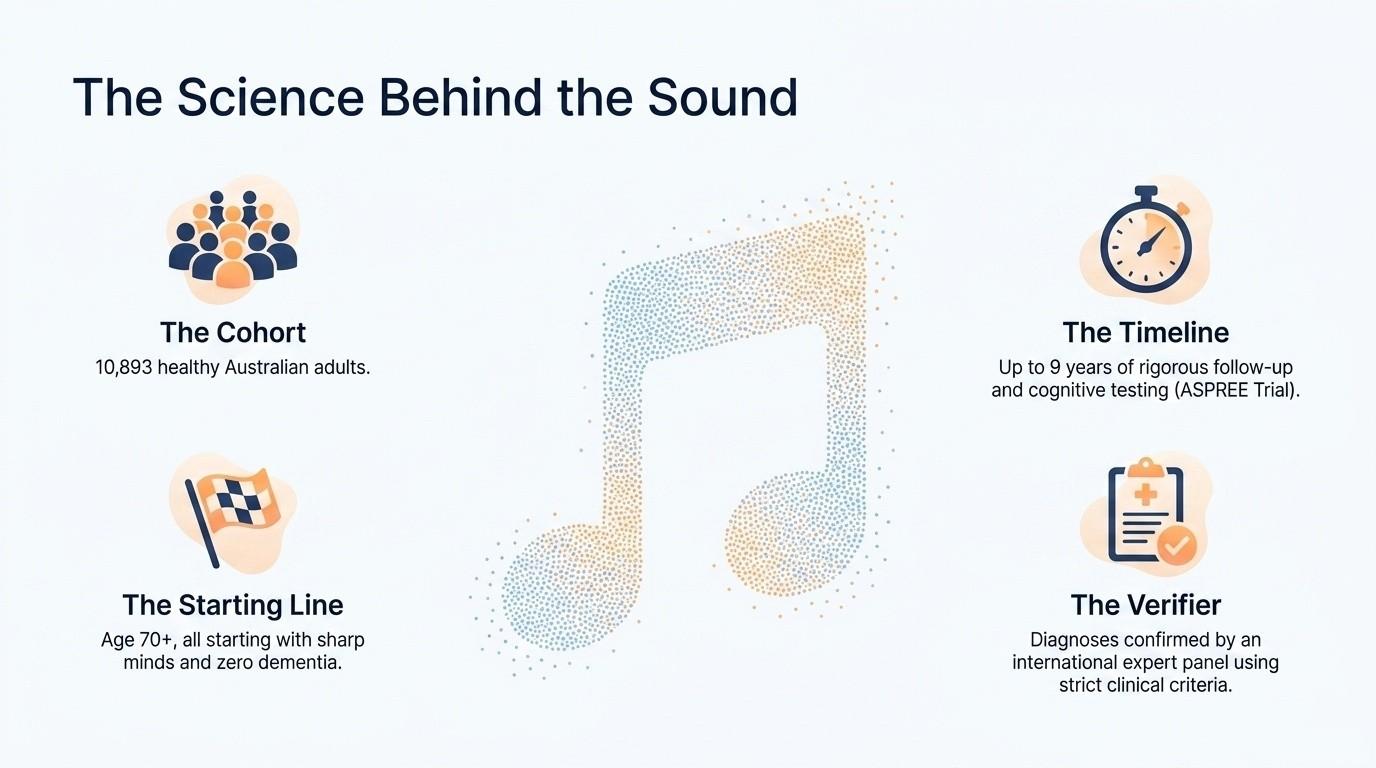
The research was part of the large ASPREE trial. Participants underwent regular cognitive testing and any dementia diagnoses were carefully confirmed by an international expert panel using strict criteria.
To strengthen the results, researchers waited three years after asking about music habits before counting dementia cases — helping rule out the possibility that early brain changes were simply making people stop enjoying music.
Important Caveat
This is an observational study, so it shows a strong association rather than absolute proof of cause and effect.
However, the large number of participants, long follow-up and rigorous methods make the findings particularly convincing.
The Hopeful Takeaway
With dementia cases set to soar globally and no cure yet available, this research offers something genuinely positive: a simple, pleasurable daily habit that may help keep your brain healthier for longer.
So the answer to the question on everyone’s lips appears to be yes.
Turn up the music. Dust off that instrument. Sing along in the car. Every note might be doing far more for your future self than you ever realised. 🎵🧠
Don’t wait to start protecting your brain with the joy of music.
Research Summary: Music & Dementia Risk
Detail
Key Information
Study Title
What Is the Association Between Music-Related Leisure Activities and Dementia Risk? A Cohort Study
Lead Researcher
Emma Jaffa (Monash University honours student)
Senior / Corresponding Author
Associate Professor Joanne Ryan
Journal
International Journal of Geriatric Psychiatry
Publication Date
October 2025 (Volume 40, Issue 10, e70163)
Sample Size
10,893 healthy older adults
Participant Age
70 years and older
Country
Australia
Study Design
Large prospective cohort study (ASPREE + ALSOP)
Follow-up Period
Up to 9 years
Music Activities Measured
Listening to music/radio + playing a musical instrument (including voice)
Dementia Risk Reduction
Always listening to music → 39% lower risk
Instrument Playing
Often/always playing → 35% lower dementia risk
Combined Benefit
Listening + playing → 33% lower dementia risk and 22% lower CIND risk
Education Effect
Strongest benefits in people with 16+ years of education (up to 63% lower risk)
🔗 Direct link to the original full study (open access): https://doi.org/10.1002/gps.70163 or Read the full paper here
Disclaimer
This article is published for general information and educational purposes only. It does not constitute medical advice, health advice, diagnosis, or treatment of any kind.
All content on this website, including any studies, research, or information mentioned, is provided for informational purposes only and does not imply or guarantee any specific health outcomes.
We are not affiliated with, endorsed by, or connected in any way to any researchers, universities, research centres, journals, or institutions referenced in any article. No reference to any study, researcher, or publication should be interpreted as an endorsement or recommendation of any products sold or featured on this website.
Our products (and any products featured or linked in this article) are not intended to diagnose, treat, cure, prevent, or manage any disease or medical condition. Individual results may vary significantly. No guarantees or warranties are made regarding effectiveness, safety, or specific outcomes.