

Scientists Revisit TENS vs EMS
A 2025 medical review reveals why muscle-activating stimulation may offer benefits beyond temporary pain relief
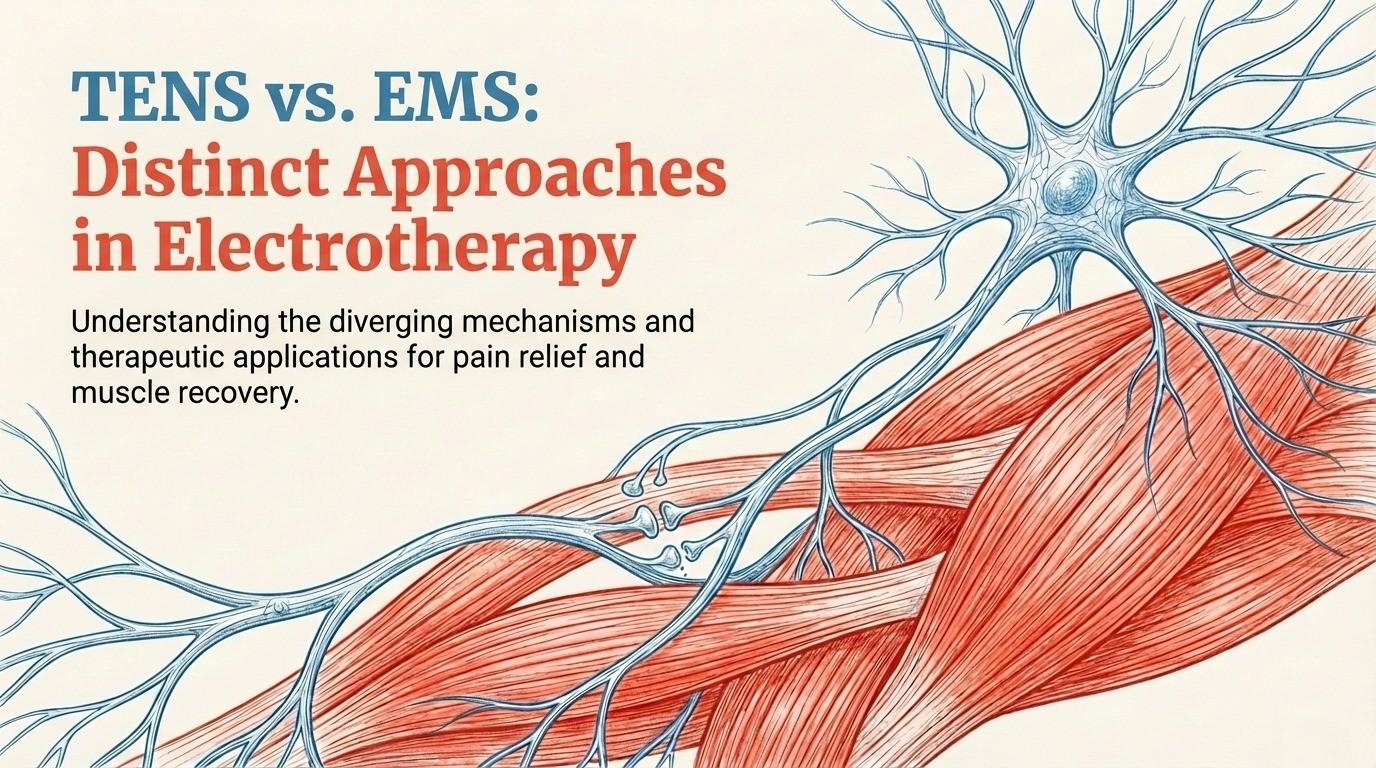
For decades, millions of people have used small electrical devices placed on the skin to deal with pain.
You may have seen them in a pharmacy. They are usually called TENS machines.
But a new medical review published in 2025 suggests something important.
The story of electrical therapy may be much bigger than people once thought.
And the real difference may lie in what part of the body the electricity actually targets.
The research review — written by scientists from institutions including Houston Methodist Hospital, UCLA School of Medicine, and the University of Wisconsin School of Medicine — revisited decades of studies on two types of electrical stimulation:
-
TENS (Transcutaneous Electrical Nerve Stimulation)
-
EMS (Electrical Muscle Stimulation)
The findings show that although both technologies use electricity, they work in completely different ways inside the body.
Understanding that difference may explain why some people only feel short-term relief, while others experience long-term improvement in how their body functions.
Two Devices That Look Similar — But Work Very Differently
At first glance, TENS and EMS devices look almost identical. Both send electrical pulses through pads placed on the skin.
But the target inside the body is completely different.
TENS: Designed to influence nerves
TENS devices primarily stimulate sensory nerves.
The goal is to change how the brain interprets pain signals.
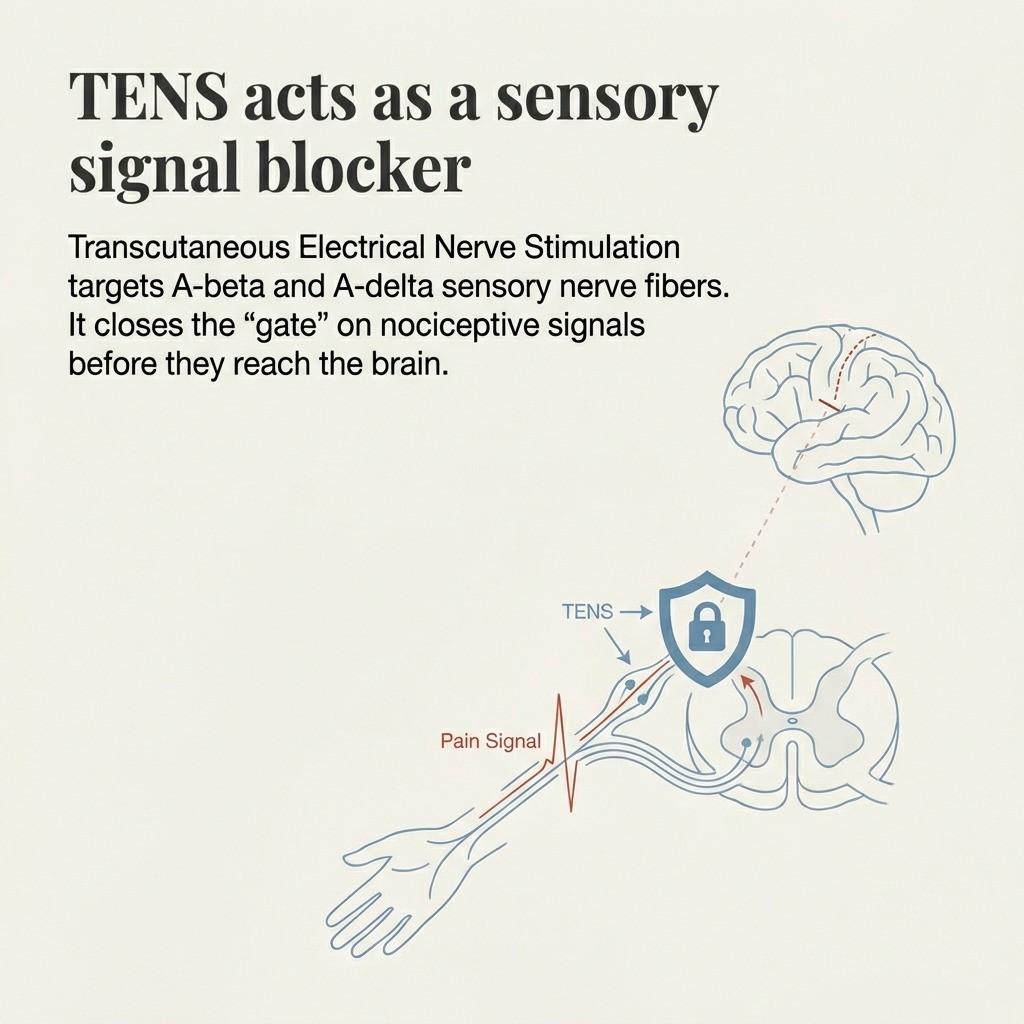
TENS: Designed to influence nerves
TENS devices primarily stimulate sensory nerves.
The goal is to change how the brain interprets pain signals.
Researchers explain that TENS works partly through something called the Gate Control Theory of Pain.
This theory suggests that certain nerve signals can temporarily “close the gate” in the spinal cord that allows pain signals to travel to the brain.
In simple terms:
-
Pain signals still exist.
-
But the brain may perceive less of them for a period of time.
This is why many people experience temporary relief while the device is on.
In simple terms:
-
Pain signals still exist.
-
But the brain may perceive less of them for a period of time.
This is why many people experience temporary relief while the device is on.
EMS: Designed to activate muscles
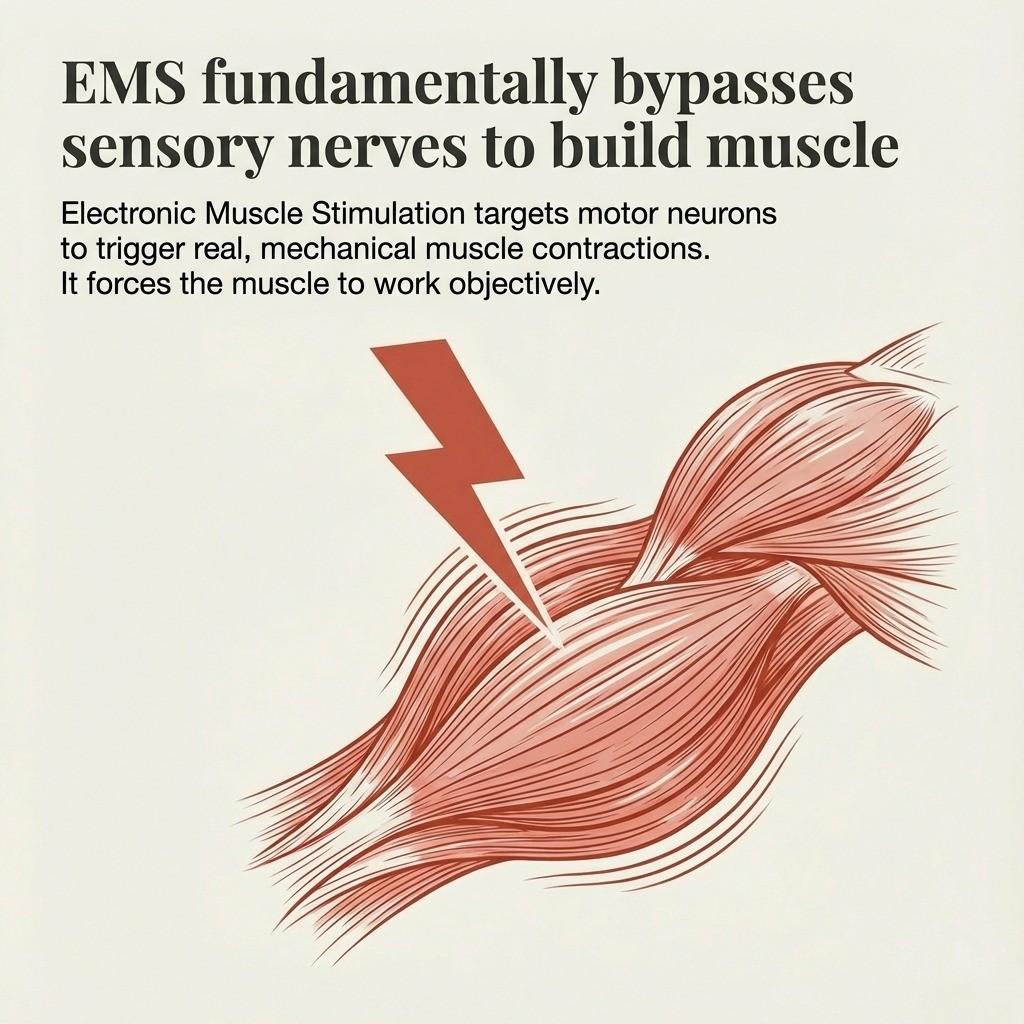
EMS takes a very different approach.
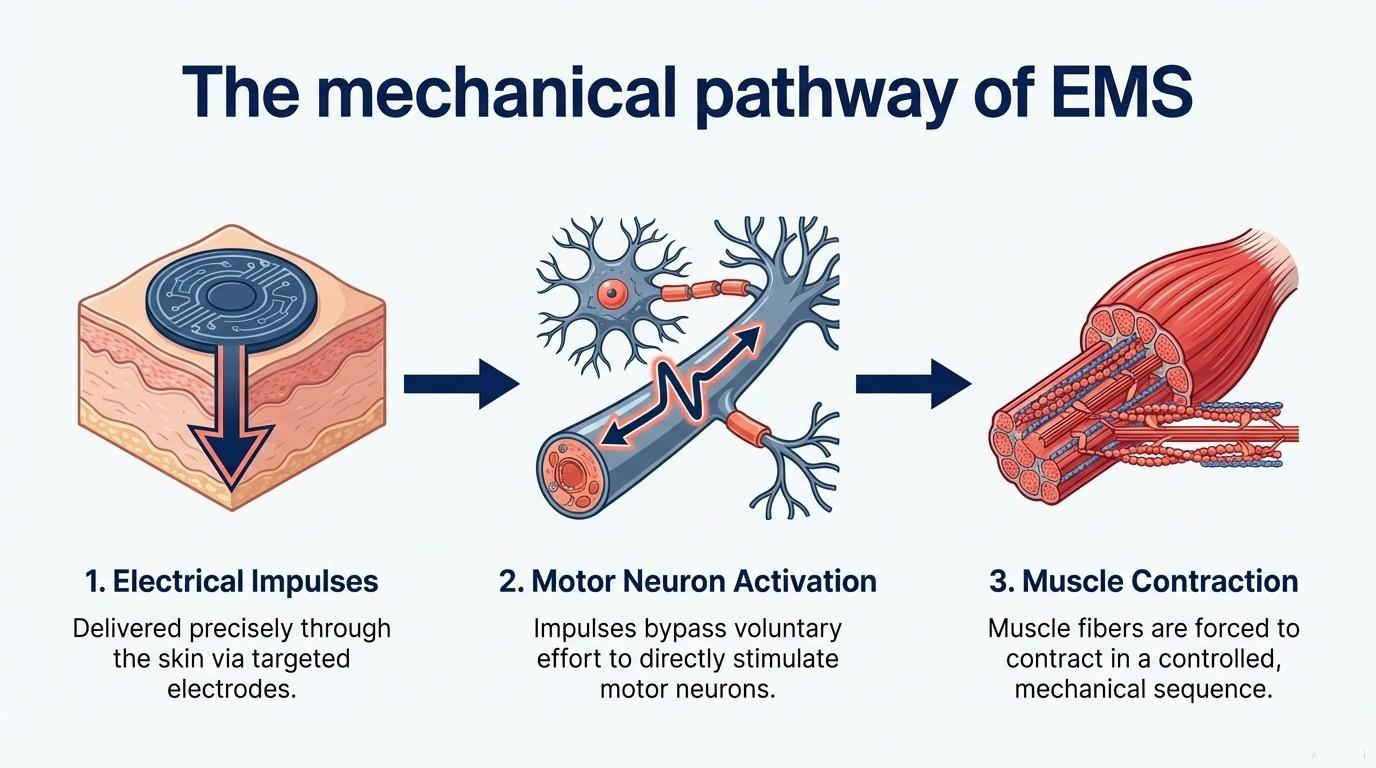
Instead of mainly stimulating nerves, EMS stimulates motor neurons that cause muscles to contract.
EMS: Designed to activate muscles
EMS takes a very different approach.
Instead of mainly stimulating nerves, EMS stimulates motor neurons that cause muscles to contract.
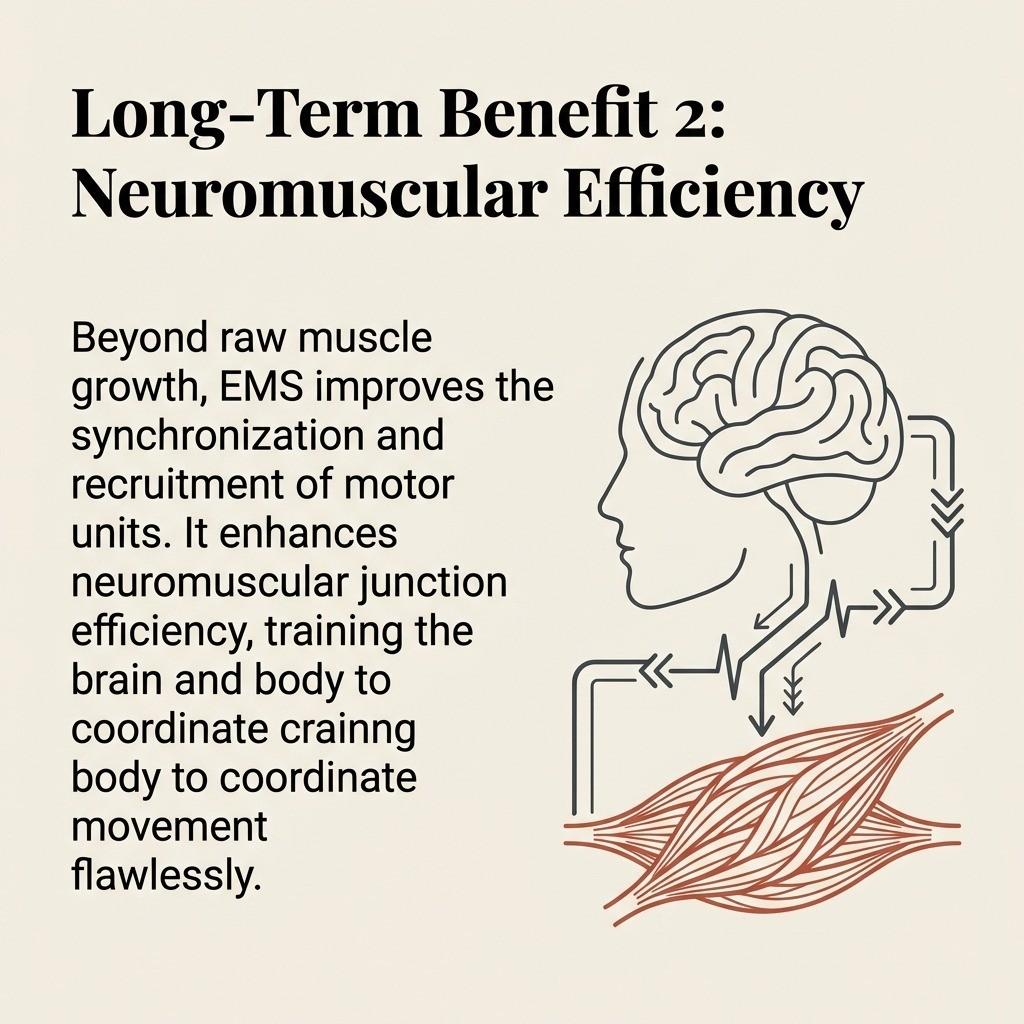
When this happens, the muscle fibers themselves begin working.
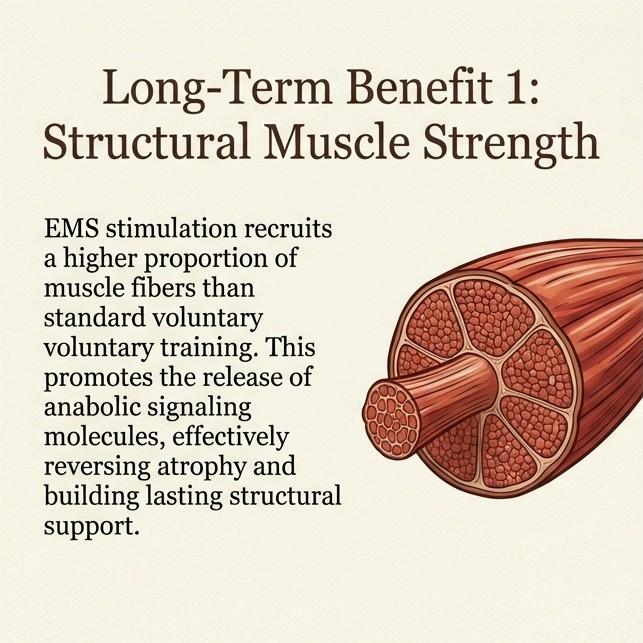
The 2025 review explains that EMS can recruit additional muscle fibers that may not normally activate during voluntary movement.
This can lead to effects such as:
-
improved muscle activation
-
increased muscle strength
-
better neuromuscular coordination
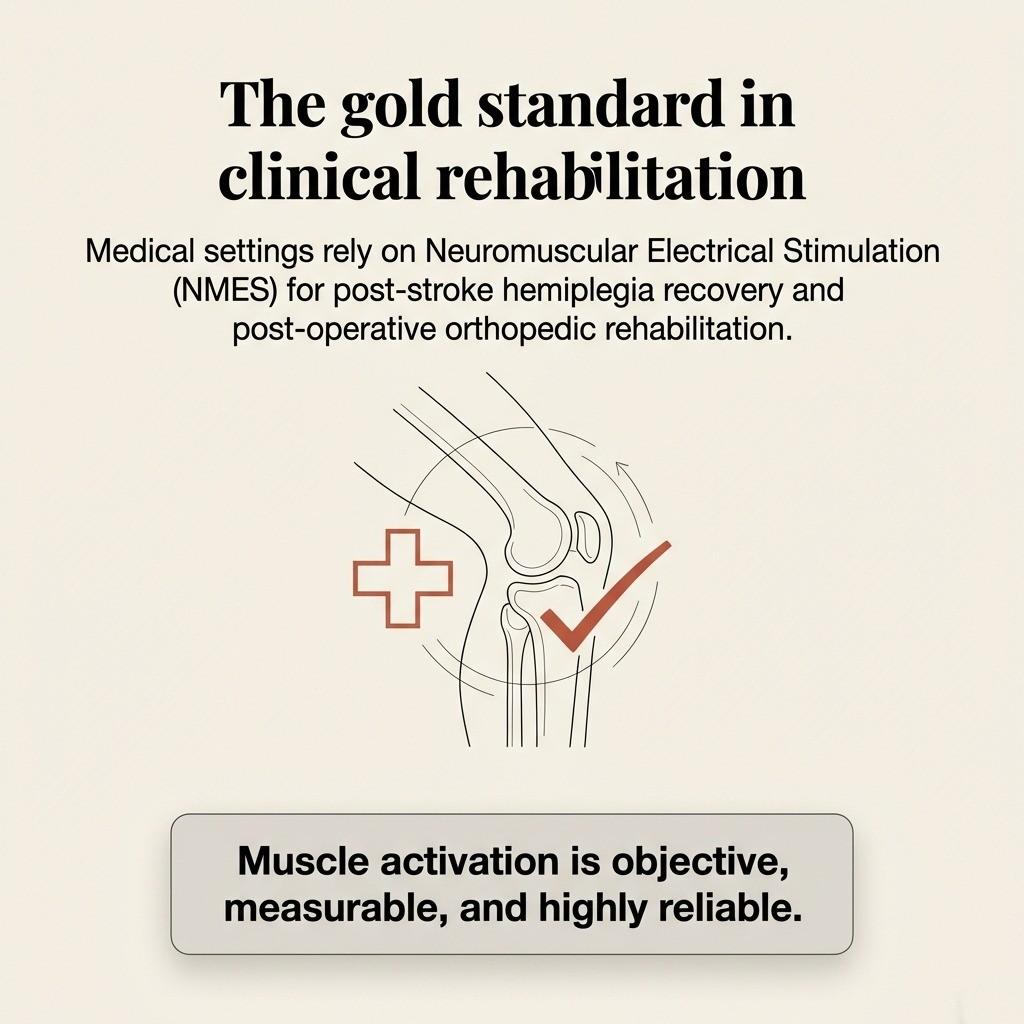
In rehabilitation settings, EMS has been used for:
-
stroke recovery
-
muscle atrophy after injury
-
sports training
-
post-surgery rehabilitation
In rehabilitation settings, EMS has been used for:
-
stroke recovery
-
muscle atrophy after injury
-
sports training
-
post-surgery rehabilitation
The Simple Way To Think About It
While TENS mainly tries to change the sensation of pain, EMS tries to change how the muscle itself works.
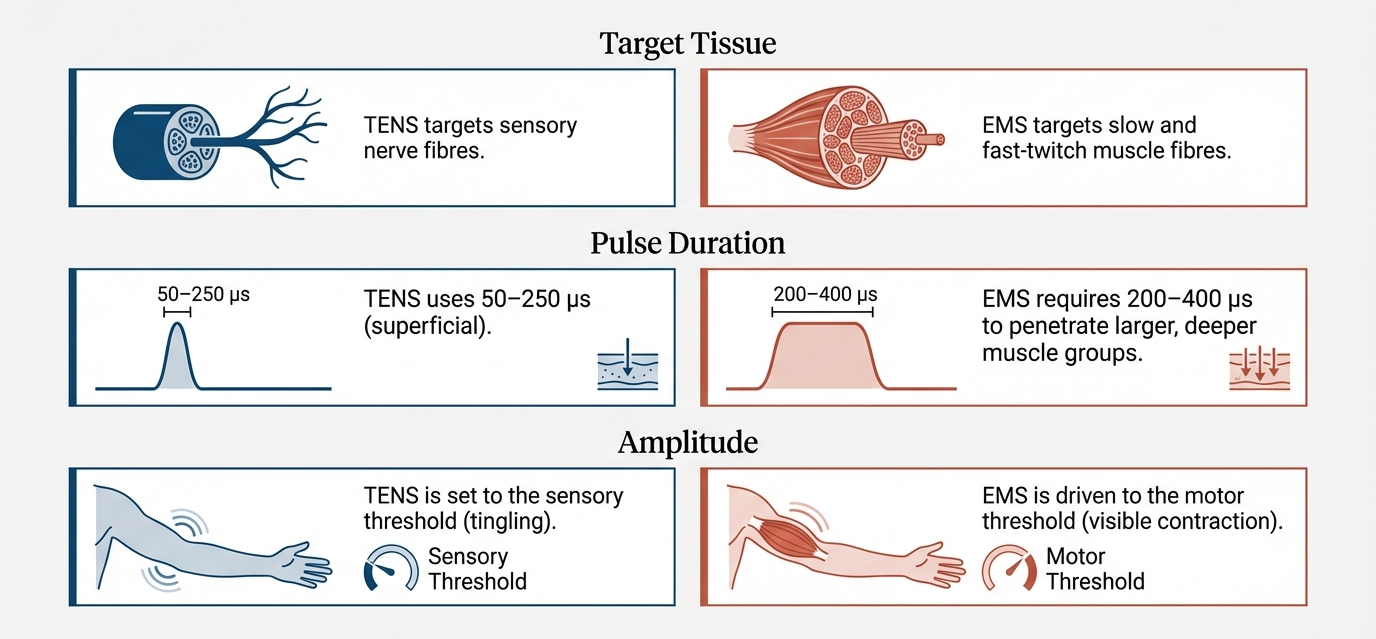
What Happens Inside The Body
The research review describes several biological processes involved when electrical stimulation is applied.
With TENS
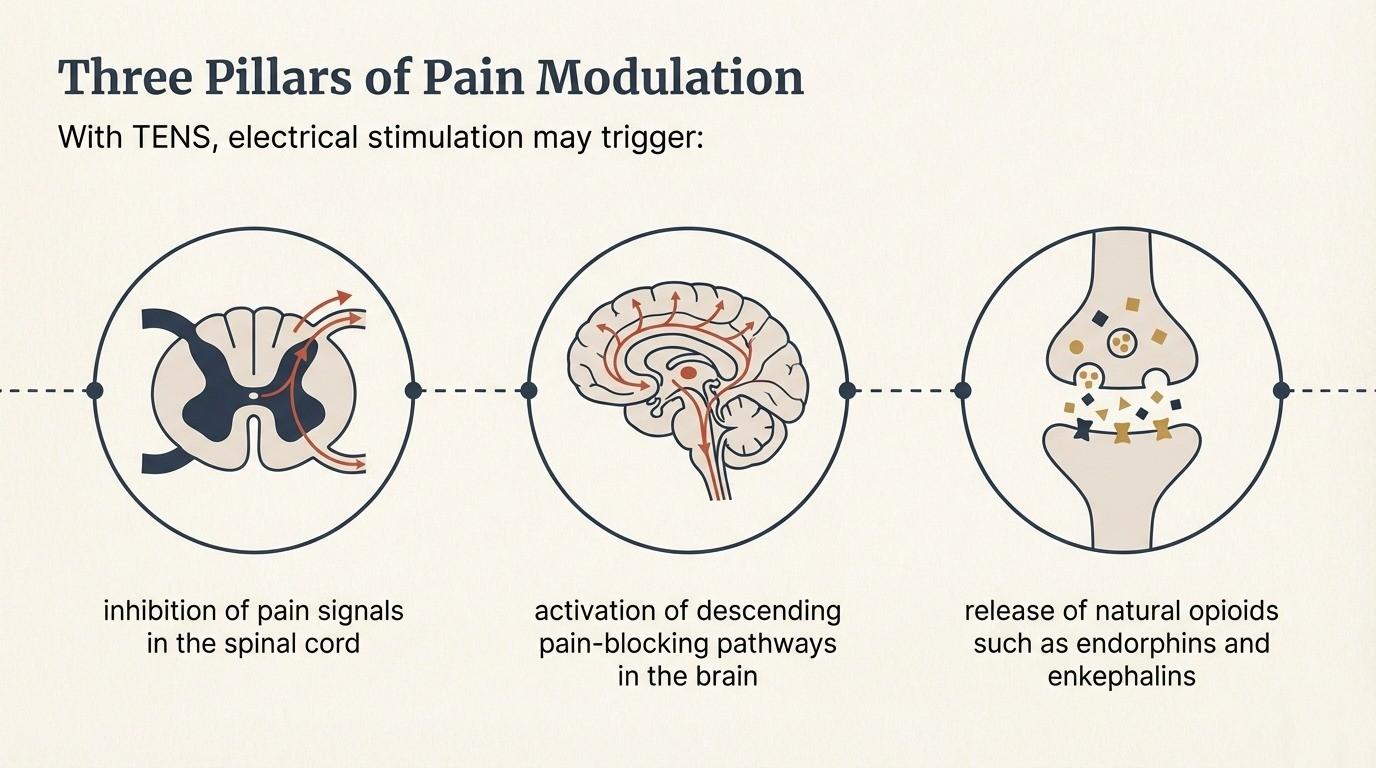
Electrical stimulation may trigger:
-
inhibition of pain signals in the spinal cord
-
activation of descending pain-blocking pathways in the brain
-
release of natural opioids such as endorphins and enkephalins
These natural chemicals can reduce how strongly pain signals are transmitted.
But there is an important limitation.
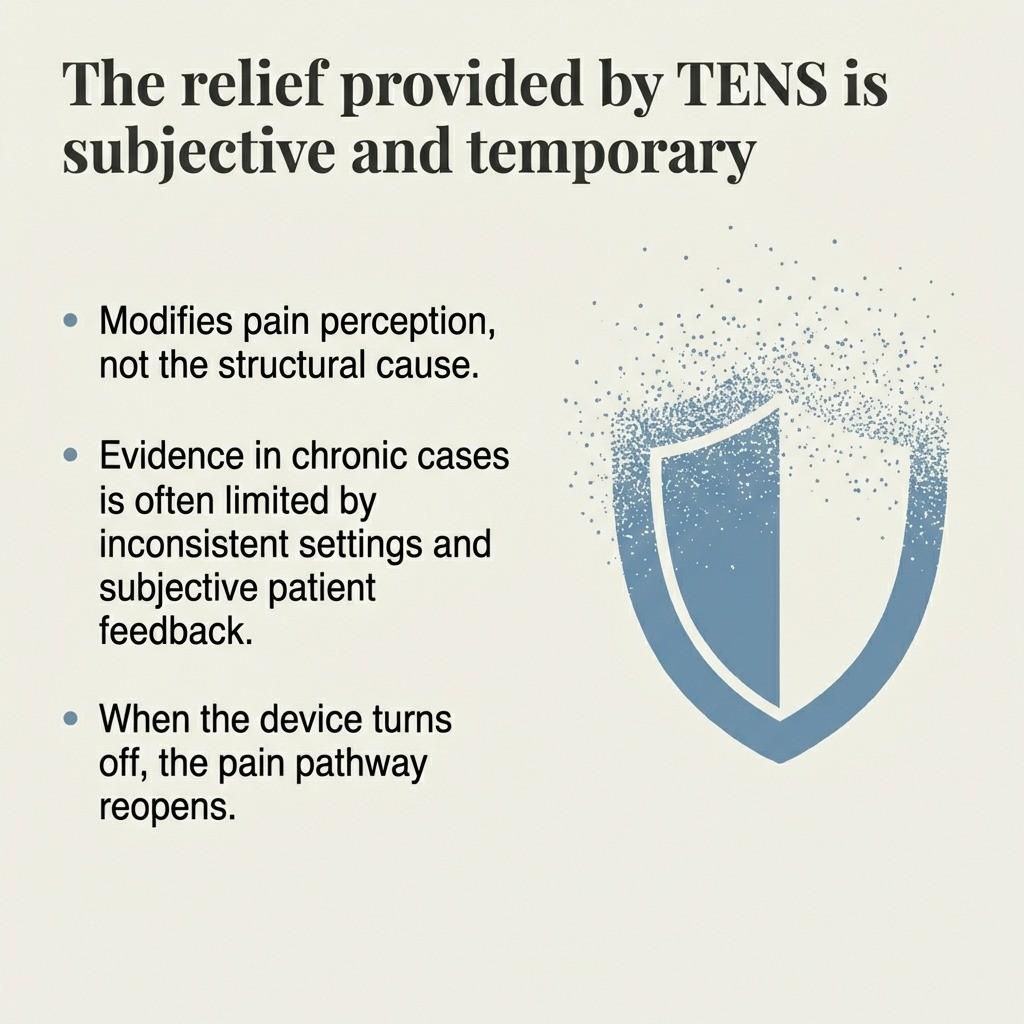
In some chronic pain conditions, the receptors involved in these pathways can become less responsive over time.
This may reduce the effectiveness of certain forms of TENS.
But there is an important limitation.
In some chronic pain conditions, the receptors involved in these pathways can become less responsive over time.
This may reduce the effectiveness of certain forms of TENS.
With EMS
EMS works through a more mechanical pathway. Electrical impulses directly activate motor neurons, causing muscle fibers to contract.
Over time, this can lead to:
-
improved recruitment of muscle fibers
-
stronger neuromuscular signaling
-
increased muscle strength
Some studies cited in the review even found EMS could produce strength improvements comparable to voluntary training in certain situations.
That finding surprised many researchers.
Why Muscle Activation Matters
Many chronic pain problems are closely linked to weak or under-used muscles.
When muscles become inactive, several things can happen:
-
reduced blood circulation
-
buildup of metabolic waste
-
joint instability
-
increased pressure on surrounding tissues
Activating muscles again can help restore:
-
circulation
-
movement
-
joint stability
And sometimes, when the underlying mechanics improve, pain may decrease naturally.
This may explain why electrical muscle stimulation has become increasingly common in sports medicine and rehabilitation clinics.
A New Direction: Combining Nerve and Muscle Stimulation
The review also suggests that combining both approaches may offer new possibilities.
If TENS helps manage pain signals and EMS improves muscle function, then using both together could address two sides of the problem simultaneously.
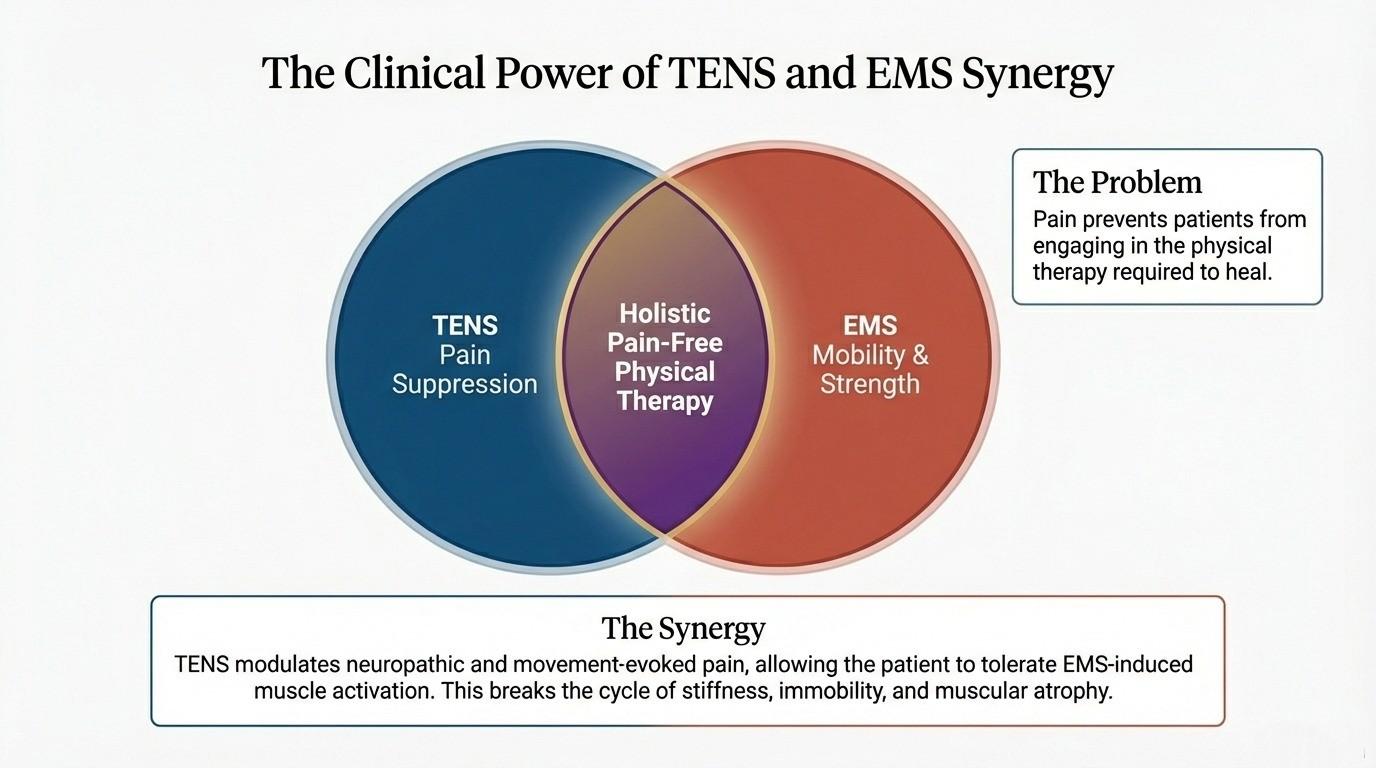
Some emerging systems are now exploring this concept.
The researchers describe how modern devices are beginning to integrate both stimulation types into a single platform that can adjust therapy settings in real time.
This could make electrical therapy easier to personalize.
What This Means For Everyday Users
Electrical stimulation has been around for decades. But the science behind it continues to evolve.
What the 2025 review highlights is simple:
Electrical therapy is not one single technology.
There are different approaches.
And they work in very different ways.
Understanding whether a device targets nerves or muscles may be the key to understanding what results someone might expect.
For people exploring non-drug options to improve comfort or support muscle function, this distinction may matter more than many realize.
Summary
What Happens When Scientists Compare EMS and TENS?
When researchers place EMS and TENS side by side, an interesting pattern begins to emerge.
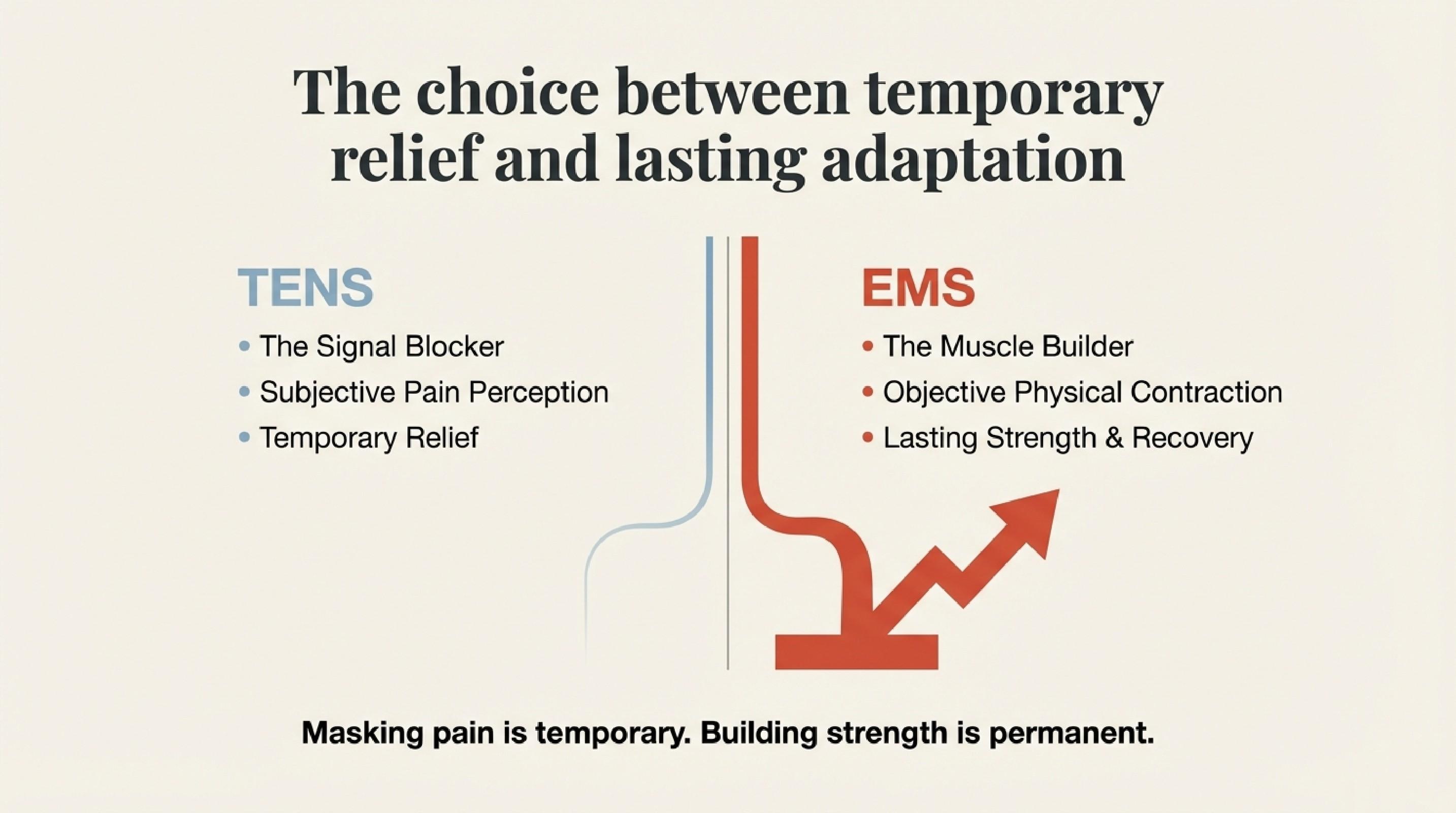
The review suggests that EMS tends to produce more consistent and measurable results across scientific studies.
Part of the reason lies in what each technology actually targets.
TENS works mainly by altering how the nervous system perceives pain.
But pain is deeply personal. Two people with the same condition may describe completely different levels of discomfort.
Because of this, many TENS studies rely on subjective pain scores, which can vary widely from one participant to another.
Researchers also note that TENS studies often use different device settings, stimulation patterns, and sample sizes, making it difficult to reproduce identical results across trials.
EMS, however, operates in a different way.
Instead of influencing pain perception, EMS directly activates motor neurons, causing muscles to contract. Those contractions can be measured objectively — through muscle strength, activation levels, and coordination.
For scientists, that difference matters.
Muscle activity can be recorded and compared in clear numbers, making the outcomes easier to verify and repeat.
Because of this, the review notes that EMS research tends to show more consistent and reproducible findings than studies focusing on TENS.
Oriems Fit Research Digest
This article is part of the Oriems Fit Research Digest series.
In this series, we share interesting and trustworthy scientific research in very simple language.
We do this to spark curiosity, help people learn, and encourage self-research.
At the end of every post, we always include links to the original research paper.
If you enjoy collecting studies or checking facts, you can go directly to the source.
This article does not give medical advice.
It simply explains what scientists are currently discussing in research.
Research Paper Details
Original paper title:
Latest Advancements in Transcutaneous Electrical Nerve Stimulation (TENS) and Electronic Muscle Stimulation (EMS): Revisiting an Established Therapy with New Possibilities
Study type:
Scientific review (not a clinical trial)
Published in:
Journal of Pain Research (2025)
Link to original study: https://doi.org/10.2147/JPR.S493162
Why this source is trustworthy:
-
Peer-reviewed journal
-
Written by clinicians and researchers
-
References hundreds of prior studies
-
Published in an established pain research journal